
Coriander is the quiet workhorse of Indian cooking — present in almost every masala, curry, and dal, yet rarely the star. But the form you buy it in (whole seeds vs pre-ground powder) makes a bigger difference than most people realise. This isn’t a case where one is simply better. They do different jobs.
The Core Difference: Flavour Chemistry
Whole coriander seeds contain volatile oils — primarily linalool — locked inside the seed structure. These oils are what give coriander its distinctive citrusy, slightly floral aroma. The moment you grind the seeds, those oils are exposed to air and begin evaporating.
The timeline is unforgiving:
- Freshly ground (within hours): Bright, citrusy, complex — the full spectrum
- 1 month after grinding: Still good, top notes fading
- 3 months: Noticeably flatter, citrus notes mostly gone
- 6+ months: Warm and earthy but one-dimensional — a shadow of fresh
Whole seeds, stored properly, hold their volatile oils for 12–18 months. That’s the fundamental trade-off: convenience versus flavour.
When Whole Coriander Wins
Tadka and tempering
Whole coriander seeds crackled in hot oil release their flavour directly into the fat — a technique used across Indian regional cooking. Ground coriander can’t do this; it would burn instantly at tadka temperatures.
Garam masala and fresh blends
Any time you’re making a spice blend from scratch, start with whole coriander. Toasted and ground fresh, it’s the difference between a good garam masala and a great one.
Pickles and preserves
Whole seeds hold their texture and release flavour slowly — essential in pickles where they need to survive weeks of curing.
Coarse crushing for texture
Lightly crushed (not fully ground) coriander seeds added to bread dough, salad dressings, or as a crust for roasted vegetables give bursts of citrusy flavour and pleasant texture.
When Ground Coriander Wins
Everyday curries and dals
For daily cooking, ground coriander is simply more practical. It dissolves into gravies, distributes evenly, and you need it in quantities (often a tablespoon or more) that make grinding fresh every time unrealistic.
Marinades and rubs
Ground coriander coats surfaces evenly — essential for tandoori marinades, kebab rubs, and roasted vegetables where you want uniform coverage.
Baking
Whole seeds would be intrusive in cookies, cakes, or breads where coriander appears as a background note. Ground integrates seamlessly.
When you’ll use it fast
If you cook Indian food daily and go through coriander powder in 6–8 weeks, the freshness gap narrows significantly. High turnover beats perfect storage.
The Smart Kitchen Setup
Here’s what we recommend for most home cooks:
- Keep both. A jar of whole seeds for tempering and fresh grinding, and ground powder for daily cooking.
- Buy ground in small quantities (50–100g) that you’ll finish in 2–3 months.
- Buy whole in larger quantities — they last, and you’ll use them for tadka, pickles, and fresh grinding.
- Grind small batches of the whole seeds when you want peak flavour for a special dish — a week’s worth at a time.
How to Tell Good Coriander (Either Form)
Whole seeds
Should be plump, round, and uniform golden-brown. Shriveled, pale, or dusty seeds are old. Crush one between your fingers — the aroma should be immediately citrusy and bright. No smell = no flavour.
Ground powder
Should smell citrusy and warm when you open the jar — not dusty or flat. Colour should be warm tan-brown, not grey. If it’s been open more than 4 months, do the smell test before trusting it in an important dish.
The Grinder Question: What to Use
If you’re going to grind coriander fresh (and you should, at least sometimes), the tool matters less than the technique:
- Dedicated spice grinder (a cheap coffee grinder reserved for spices): Best for regular use. Grinds ¼ cup in under a minute.
- Mortar and pestle: Slower but gives you control over texture — ideal for the coarse crush used in tadka or bread.
- High-power blender: Works for larger batches but generates heat — pulse in short bursts and let it cool between.
Whatever you use, grind only what you need for 1–2 weeks. And never grind spices in a grinder that still smells of coffee — the flavours transfer both ways.
Cost Comparison: Is Fresh Grinding Worth It?
Whole coriander seeds typically cost 20–30% less per gram than pre-ground powder (less processing). A basic spice grinder costs ₹500–1,500 and lasts years. If you cook Indian food regularly, the grinder pays for itself within months — not just in money, but in the flavour upgrade across every dish.
The real cost of pre-ground isn’t money — it’s the flavour you’re leaving on the table. Once you’ve tasted dal with freshly ground coriander versus six-month-old powder, the grinder becomes non-negotiable.
Our Recommendation
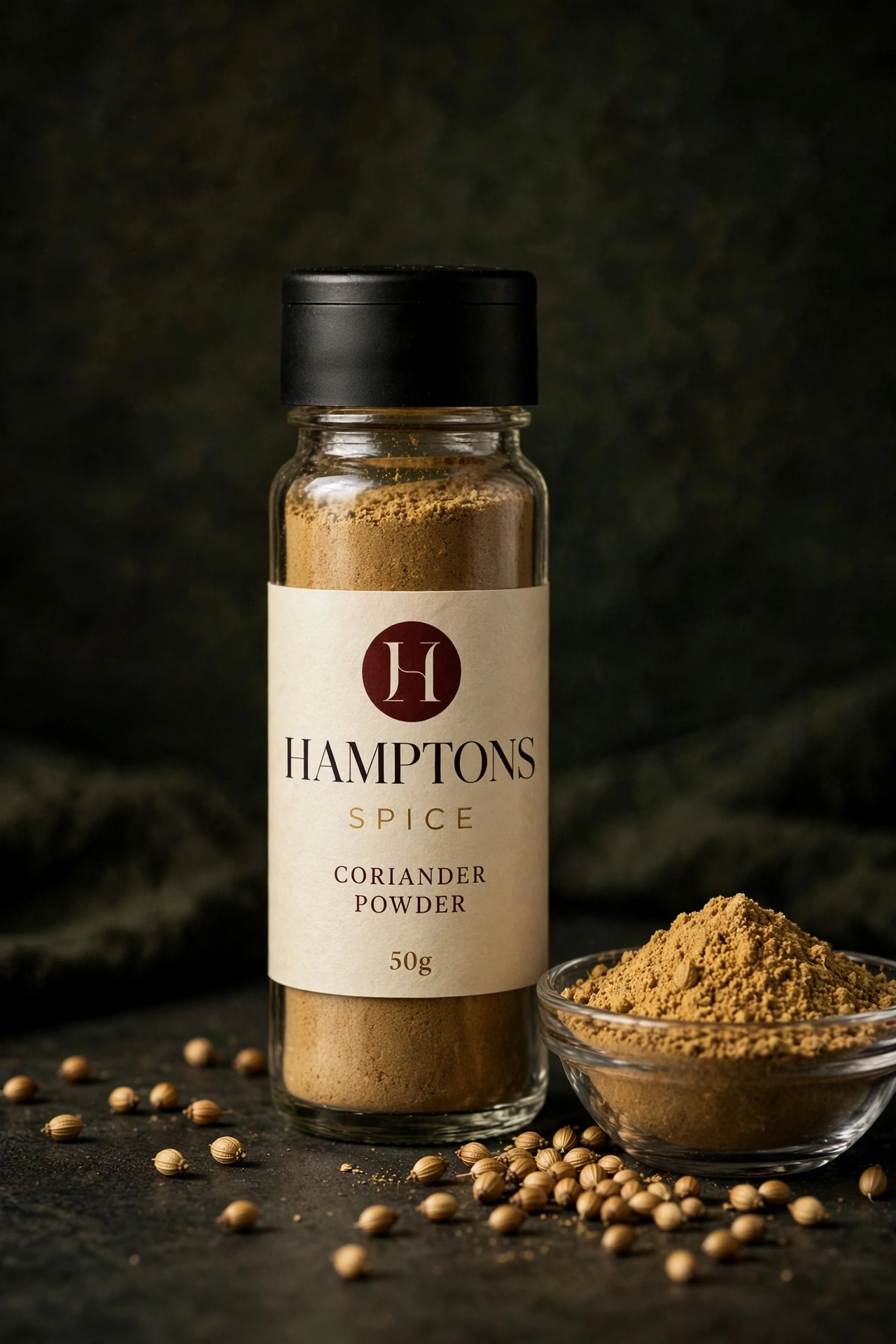
Don’t choose — stock both, but buy smart. Our Coriander Powder 50g in the glass bottle is ground from the same plump seeds we sell whole, in small batches for maximum freshness. It’s sized for the 2–3 month window when ground coriander is at its best. For whole seeds — for your tadka, pickles, and fresh grinding — explore our full coriander range.
The best coriander is the freshest coriander, in whatever form suits what you’re cooking today.