
Spice adulteration is one of the food industry’s worst-kept secrets. The global spice trade moves billions of dollars of product through long, opaque supply chains — and at every step, there’s economic incentive to stretch, dilute, or fake. India, as both the world’s largest producer and consumer of spices, sees more than its share.
This isn’t about fear. It’s about knowledge. These simple home tests take minutes and tell you whether what’s in your jar is what the label claims.
Why Spices Get Adulterated
The economics are simple: pure, high-quality spice costs more to produce than diluted product sells for at the budget end. Adulteration happens through:
- Bulking — adding cheap fillers (starch, flour, chalk, brick powder) to increase weight
- Colouring — adding synthetic dyes to fake the appearance of quality
- Substitution — replacing expensive spice with cheaper lookalikes
- Exhausted spice — reusing spice that’s already had its oils extracted (common with black pepper)
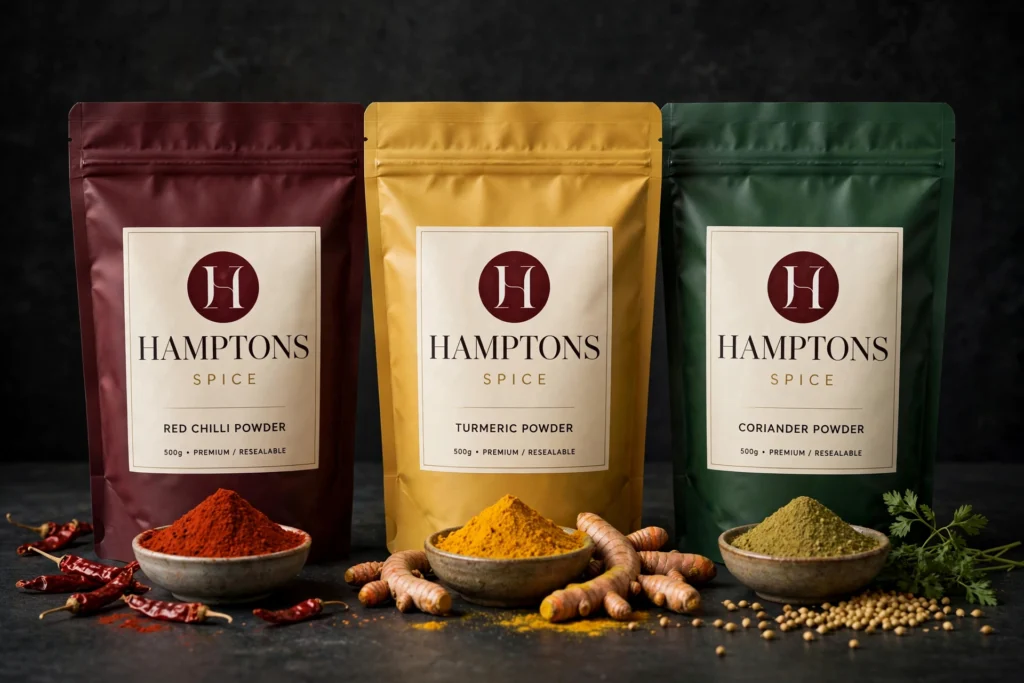
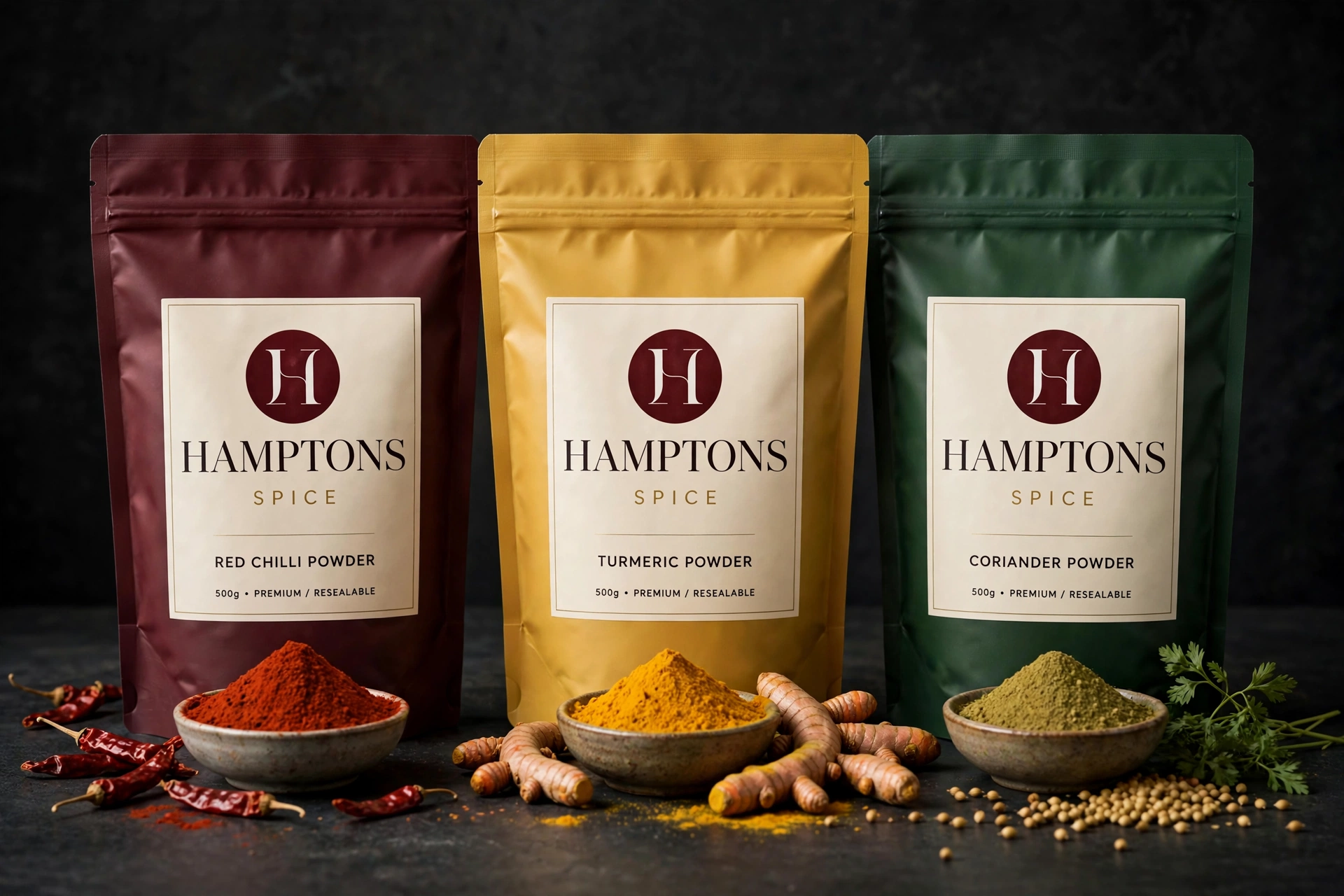
The three spices we sell — chilli, turmeric, coriander — are all frequent targets. Here’s how to test each one.
Testing Turmeric Powder
The water test (for synthetic colour)
Sprinkle ½ teaspoon on a glass of still water. Pure turmeric is hydrophobic — most particles float or sink slowly, and the water stays relatively clear for several minutes. If the water turns bright yellow immediately, suspect metanil yellow or another water-soluble synthetic dye.
The acid test (for chalk)
Add a few drops of lemon juice or vinegar to a spoonful of turmeric. If it fizzes or bubbles, chalk or washing soda has been added. Pure turmeric doesn’t react to acid.
What to look for when buying
Real turmeric is golden-orange (not neon yellow, not pale beige), smells warm and earthy-peppery, and stains your fingers readily. Suspiciously low prices for “premium” colour are a red flag — real high-curcumin turmeric costs more to produce.
Testing Red Chilli Powder
The water test (for brick powder and dyes)
Mix 1 teaspoon in a glass of water and let it sit for 5 minutes. Pure chilli powder will mostly settle, leaving the water slightly tinted. If you see a distinct layer of gritty red sediment (brick powder) or the water turns an unnatural, vivid red (synthetic dye like Sudan), be suspicious.
The rub test
Rub a pinch between white paper. Pure chilli powder leaves an oily, reddish stain from its natural oils. If the colour wipes off as dry red dust with no oiliness, fillers are likely.
What to look for when buying
Good chilli powder has a fruity, sharp aroma — not just heat, but smell. The colour should be deep and natural, varying slightly (uniformity suggests dye). Check for stems: excessive pale flecks mean the grinder included stems and seeds to bulk up weight.
Testing Coriander Powder
The aroma test (for staleness and dilution)
Coriander is less commonly adulterated with harmful substances but frequently diluted with starch or made from poor-quality seeds. The test is simple: open the jar and smell immediately. Fresh, pure coriander powder hits you with a citrusy warmth. If it smells like dust, cardboard, or nothing — it’s either ancient or diluted.
The water test (for starch)
Mix 1 teaspoon with water to form a paste, then add a drop of iodine tincture (available at any pharmacy). If it turns blue-black, starch has been added. Pure coriander shows no colour change.
What to look for when buying
Colour should be warm tan-brown, not grey or unnaturally pale. The powder should feel slightly coarse (coriander doesn’t grind as fine as turmeric) — suspiciously silky powder may be cut with flour.
Beyond Home Tests: Buying Smart
Price is a signal
If a “premium” spice costs half what reputable brands charge, the math doesn’t work without adulteration. Quality sourcing, proper drying, and careful grinding have real costs.
Transparency is a signal
Brands that tell you the variety (Salem turmeric, Byadgi chilli), the grind date, and the sourcing are putting their reputation on specific claims. Vague labels (“premium quality”, “export grade”) with no specifics are easier to hide behind.
Certifications help but aren’t everything
FSSAI licensing is mandatory in India — check for the license number. But certification alone doesn’t guarantee quality; it guarantees minimum safety compliance. The tests above tell you more about actual quality.
Our Approach: Radical Simplicity
We deal with adulteration by making it structurally impossible in our supply chain: we buy whole spices from trusted growers, we grind them ourselves in small batches, and we add nothing. No colour, no fillers, no preservatives. The ingredient list on every product is one word: the spice itself.
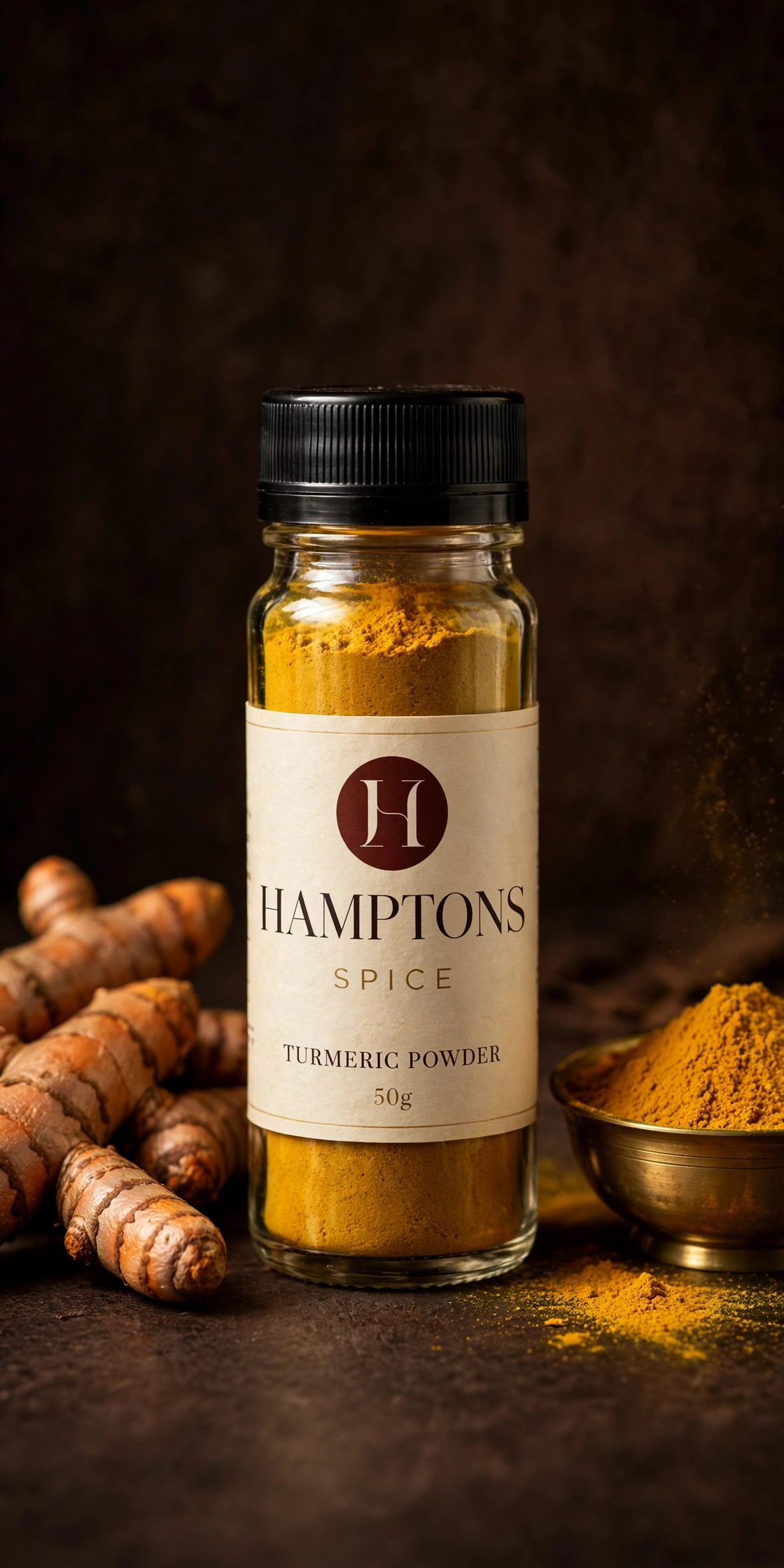
You don’t have to take our word for it — run the tests above on our products. Our Turmeric Powder 50g, Red Chilli Powder 50g, and Coriander Powder 50g should pass every one. That’s the point. Browse the full range at our shop.
An informed customer is our best customer. Now you know what to look for — in our spices and everyone else’s.